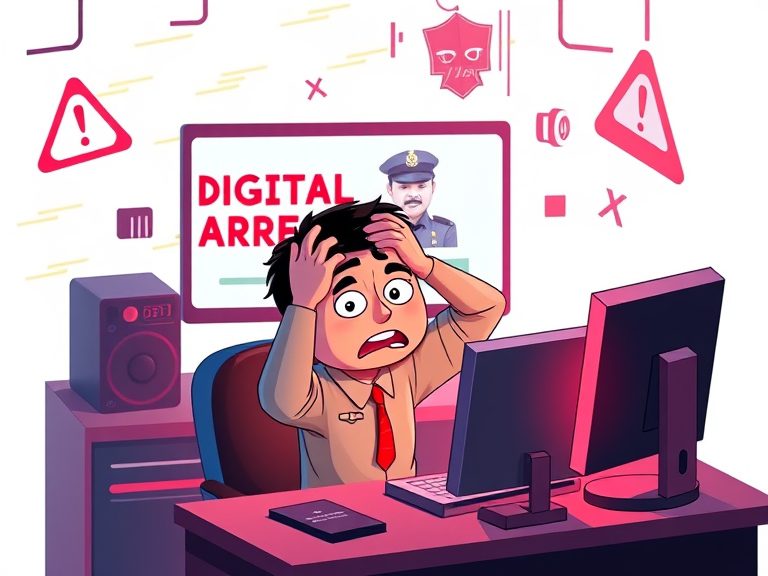
The digital arrest scam in India involves scammers pretending to be police or government officials. They accuse victims of serious crimes and threaten arrest unless they pay money. These scammers use fake documents and video calls to seem real. To stay safe, never share personal information over the phone and always verify suspicious calls with a trusted source.
The digital arrest scam is a carefully planned act that plays on fear and urgency. By pretending to be officials from reputable organizations, scammers manipulate victims into following their demands. Here’s how it usually unfolds:
How The “Digital Arrest” Scam Operates?
Step 1: The Fake Phone Call or Message
The scam often begins with a simple message or phone call, which might appear to be from a bank, telecom provider, or even a courier service. The message typically warns the recipient about a legal issue or suspicious activity linked to their accounts, creating a sense of urgency. The victim is then directed to press a number or reply to connect with a “representative.” Once connected, the victim finds themselves speaking to someone posing as an official from a government agency or law enforcement body.
Step 2: Pretending to Be the Police or Government
On the call, the scammer escalates the tension, using personal information like the victim’s name, ID number, or address to appear credible. They then claim the victim is involved in serious crimes, like money laundering or tax evasion, to increase anxiety. In many cases, the scammer asks the victim to switch to a video call, making the interaction seem even more realistic. During the video call, scammers may appear in uniforms or set up fake “official” backgrounds to add authenticity. Victims are sometimes shown falsified documents, like arrest warrants, further cementing the illusion of legitimacy.
Step 3: Demanding Money Right Away
With the victim sufficiently alarmed, the scammer introduces a way to “resolve” the issue. They request immediate payment as a “fine” or “security deposit” to prevent arrest or other legal actions. These payments are usually demanded via untraceable channels, such as cryptocurrency or prepaid cards, which makes it nearly impossible to retrieve the money once transferred. Scammers often keep the victim on the call throughout the process, using high-pressure tactics to prevent them from consulting others or seeking advice, pushing them to comply quickly.
Recent Scenarios of “Digital Arrest” Scam
#1: Elderly Man Loses ₹1 Crore to Fake CBI Officers
In Surat, a 90-year-old man was tricked by scammers pretending to be CBI officers. They accused him of drug crimes and scared him into giving them over ₹1 crore. The scammers used fake documents and threats to make him believe he was in serious trouble.
#2: Quick-Thinking Bank Officer Saves Doctor from ₹13 Lakh Scam
In Hyderabad, a 61-year-old doctor almost lost ₹13 lakh. An SBI bank officer noticed the doctor’s nervous behavior and found out he was being scammed. The bank staff showed him articles about the scam, and he realized he was about to be conned.
#3: Noida Woman Duped of ₹34 Lakh by Fake Enforcement Directorate
A woman in Noida was scammed out of ₹34 lakh. The scammers pretended to be from the Enforcement Directorate and claimed a parcel in her name contained illegal items. They pressured her to pay the money to avoid arrest.
How can we recognize a DIGITAL ARREST Scam?
Unexpected Call or Message: You get a call or message from someone claiming to be from the police, a government agency, or a bank. They say there’s a serious issue with your account, and you need to act fast.
Creating Fear: The caller tries to scare you by saying you’re involved in serious crimes like money laundering or tax evasion. They create a sense of urgency to make you panic.
Personal Information: They use your personal details like your name, ID number, or address to sound convincing. This makes you believe they are genuine.
Video Call: Sometimes, they ask you to switch to a video call. They might show fake documents or wear uniforms to look official.
Demand for Money: They ask you to pay a fine or security deposit immediately to avoid arrest or legal action. They usually want the money through untraceable methods like cryptocurrency or prepaid cards.
Pressure Tactics: They keep you on the call and use high-pressure tactics to stop you from thinking clearly or seeking advice from others.
Report Suspicious Activities: If you encounter a suspected digital arrest scam, report it immediately to the National Cyber Crime Reporting Portal at cybercrime.gov.in or call the cybercrime helpline at 1930. Prompt reporting can help authorities take swift action against scammers.