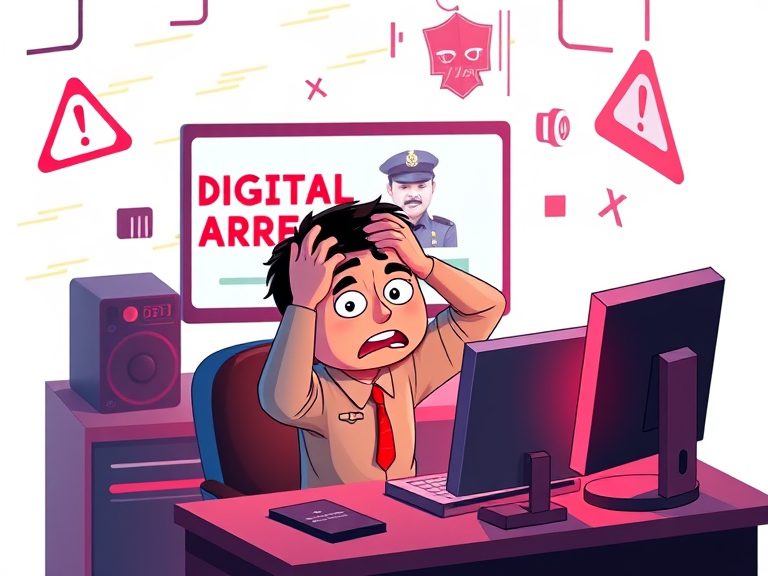
The digital arrest scam is a type of cyber fraud in which criminals pretend to be police officers, CBI officials, ED officials, or other government representatives. They tell the victim that their name, phone number, bank account, or identity has been linked to a serious crime and then use threats to demand money.
The pressure is what makes this scam work. The caller may keep the victim on a video call for hours, show fake documents, use police-station backgrounds, and insist that nobody else be told. The goal is simple: keep the victim scared and isolated long enough to make them pay.
And there is one important thing to remember: there is no such thing as a “digital arrest” under Indian law. The Indian Cyber Crime Coordination Centre (I4C) has specifically warned that criminals are using this tactic while impersonating law enforcement and government agencies.
How Does the “Digital Arrest” Scam Work?
Step 1: It Starts With a Call or Message
The first contact can look fairly ordinary. A scammer may claim to be calling from a courier company, telecom provider, bank, police department, or another organisation. They might say that a parcel linked to your name has been seized, your number is connected to an illegal activity, or there is a problem with your account.
Step 2: The Caller Pretends to Be an Official
The call then moves to the supposed “investigation.” The scammer may already know basic details such as your name, address, or phone number, which makes the story sound believable. They may accuse you of money laundering, drug trafficking, using your identity for illegal activity, or some other serious offence.
In some cases, the victim is moved to a video call. The scammer may wear a uniform, use a fake police-station or government-office background, and show fabricated notices or arrest warrants. All of this is designed to make the call look genuine.
Step 3: The Pressure Starts
Once the victim is frightened, the scammer offers a way out. They may ask for money as a “fine,” “security deposit,” or payment to settle the case. The amount can be large, and the victim may be told to transfer it immediately.
The scammer may also keep the victim connected on the phone or video call and tell them not to speak to family members, friends, banks, or anyone else. Keeping the victim on the call also leaves them little time to stop and question the story.
Real Cases of “Digital Arrest” Scams
#1: 90-Year-Old Man Loses ₹1.15 Crore in Surat
In Surat, a 90-year-old man was targeted by people pretending to be CBI officers. They claimed that drugs had been found in a parcel sent in his name and accused him of money laundering. The scammers kept him under a fake “digital arrest” for 15 days and transferred about ₹1.15 crore from his accounts. Surat Crime Branch later arrested five suspects in connection with the case.
#2: Bank Staff Help Stop a ₹13 Lakh Fraud in Hyderabad
In another case in Hyderabad, a senior citizen went to an SBI branch to withdraw money while remaining on a call with scammers. Bank employees noticed that something was wrong and questioned him about the withdrawal. They eventually connected him with the 1930 cybercrime helpline, where he learned that the so-called digital arrest was a scam. The intervention prevented the transfer of around ₹13 lakh.
#3: Noida Woman Loses ₹34 Lakh After Fake ED Notices
A woman in Noida lost ₹34 lakh after scammers claimed to be connected to the Enforcement Directorate. They told her that a parcel sent in her name contained illegal items and sent fake notices through WhatsApp. The victim was also contacted over Skype and pressured to transfer the money. Police registered a case and began an investigation.
How to Recognize a “Digital Arrest” Scam
Unexpected call or message: Someone suddenly contacts you claiming there is a serious legal problem involving your name, phone number, bank account, or a parcel.
Fear and urgency: The caller says you will be arrested or face serious legal action unless you act immediately.
Use of personal information: The caller knows some of your details and uses them to make the story sound genuine.
Video calls and fake documents: Scammers may use uniforms, fake office backgrounds, fabricated notices, or video calls to look like real officials.
Demand for money: You are asked to transfer money to avoid arrest, close a case, or “verify” your bank account.
They tell you to stay on the call: The scammer tries to stop you from speaking to your family, bank, lawyer, or the real authorities.
What Should You Do If You Get Such a Call?
Do not panic and do not transfer money. End the call and check the claim using an official phone number or website. Do not share OTPs, passwords, banking details, Aadhaar information, or other sensitive information with the caller.
If you have already lost money or believe you are being targeted, report it as soon as possible through the National Cyber Crime Reporting Portal at cybercrime.gov.in or call 1930. If money has already been transferred, report it immediately. The sooner you report it, the better the chance of stopping the transaction.
Most importantly, remember this: real authorities do not put people under “digital arrest.” If someone is using a phone or video call to threaten you with immediate arrest and demand money, treat it as a scam and verify the claim through official channels.